

A Cavalry Company of Girls
In the early summer of 1862 there were three companies stationed along the foot of Walden’s Ridge, in Tennessee Valley, from Sale Creek to Emory Gap, drilling and doing picket duty, sometimes making scouts into Scott County to watch the enemy. One of these companies had been organized by Capt. W. T. Gass in August, 1861, another by Capt. Bert Lenty in April, 1862, and the third by Capt. W. T. Darwin in May, 1862. In the summer of 1862 some twenty young ladies of Rhea County agreed to meet at certain points in that county and go in squads to visit one of these companies, where some of them had fathers, brothers, or sweethearts. In a spirit of fun they organized a cavalry company by electing Miss Mary McDonald captain and Miss Jennie Hoyal, Miss O. J. Locke, Miss R. T. Thomison as lieutenants. The members of the company were Misses Kate Hoyal, Barbara F. Allen, Jane Keith, Mary Keith, Sallie Mitchell, Caroline McDonald, Jane Paine, Mary Robertson, Mary Paine, Mary Crawford, Anne Myers, Mary Ann McDonald, and Martha Early. This group would meet at certain places and make visits to the companies, taking knicknacks and such wearing apparel as the soldiers needed.
After the Federals had occupied the valley in 1863, reducing the women and children to starvation, one John P. Walker came out of his hiding place and gathered about him deserters and army stragglers, organized a cavalry company, and attached it to the 5th Tennessee, known as Colonel Goon’s “Hogback” Regiment of Cavalry. After robbing the citizens from the time General Rosecrans occupied Chattanooga in 1863 until April, 1864, Captain Walker concluded he would crush the “rebellion.” So on the 5th of April, 1865, he ordered Lieut. W. B. Gothard to arrest each of these dangerous young ladies living north of Squire Thomison’s, which was two miles south of Washington, and to be at that place by twelve o’clock on April 6. The same notice was given for those living southeast of Dunwoody’s Mill, on Richland Creek, as well as those living north of Smith’s Crossroads.
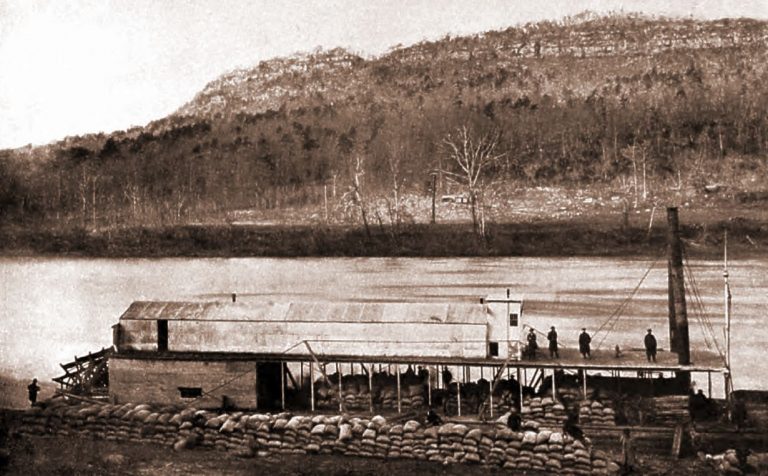
Lieutenant Gothard, with a mounted guard, marched seven of the young ladies afoot from Thomison’s five miles to Smith’s Crossroads, where six more of the girls were added, making thirteen They were then marched to Bell’s Landing on the Tennessee River. It was dark and muddy, and the girls marched before a mounted guard through water and mud in the dark, often in mud over their shoe tops. When near Bell’s Landing the squad of three from Dunwoody’s joined them, and the sixteen were marched to Bell’s Landing and held on the river bank until the old boat known as the “Chicken Thief” came. They were then ordered on board this boat, which was used by the government for shipping hay, hogs, and cattle, and what else could be found or taken from anyone who was fortunate enough to have anything left. The old boat had no cabin, but there was a place called the “dining room,” and from this the table was moved out and the sixteen girls placed therein, with a guard at each door.
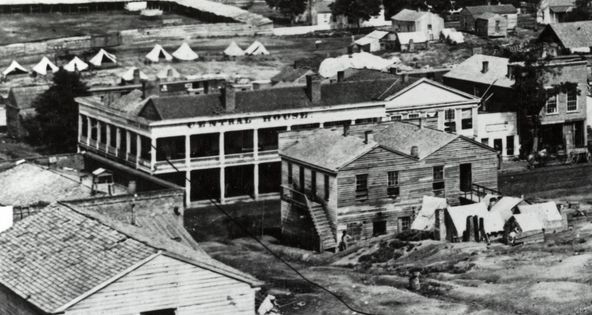
The girls were worn out. Some of them had walked ten or twelve miles, and none less than six. They were exhausted and soon lay down in rows on the floor. On arriving at Chattanooga, they were marched up Market Street to the corner of Seventh to the office of the provost marshal, named Brayton. General Steadman’s adjutant, S. B. Moe, sent for the General, who came in and looked at the girls. After he heard Captain Walker’s tale, he gave him a severe reprimand and directed his adjutant to take them to the Central House, have the best meal possible prepared for them, then take them back to the old boat and have Captain Wilds, who was in charge, carry them back to their starting place. After being refreshed by this meal, they went with Adjutant Moe to the boat, on which they had the same accommodations as before—no beds, no chairs, no guards. While waiting for the boat to start they heard that General Lee had surrendered. This was sad news to them, as many had relatives with Lee and Johnston.
General Steadman ordered Captain Walker to take the girls back to their homes, but he paid no attention to the order. The girls were glad he did not and they got home as best they could. Not one of the girls was over twenty-two years of age, and most of them were sixteen and eighteen. They belonged to the best families of Rhea County, and had been reared by parents who took great pride in them. Forty-six years have passed since then, and with the passing of time all have crossed over the river except Mary McDonald, Mary Ann McDonald, and R. T. Thomison.
Barbara Frances Allen, a member of the company, had a father in prison, three brothers with General Lee, and one with Gen. J. E. Johnston. She was eighteen years old when she took the oath of allegiance.
Miss R. T. Thomison, third lieutenant of the company, had a brother wounded at Shiloh, a brother killed at Chickamauga, and another brother with General Lee. She was seventeen.
[This vivid description of conditions at the time should be known by the girls of this generation.]
Allen, W. G. “A Cavalry Company of Girls.” Confederate Veteran, vol. 19, no. 4, 1911, p. 159. Accessed 2024.
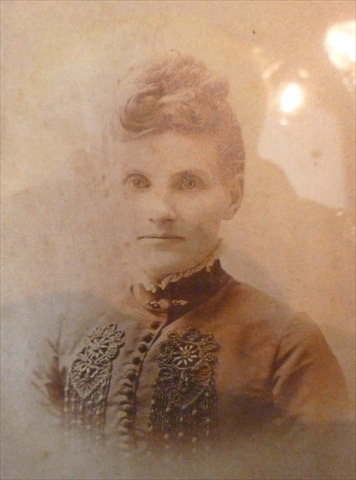
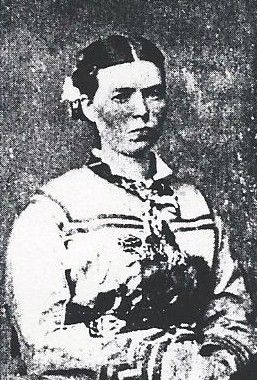
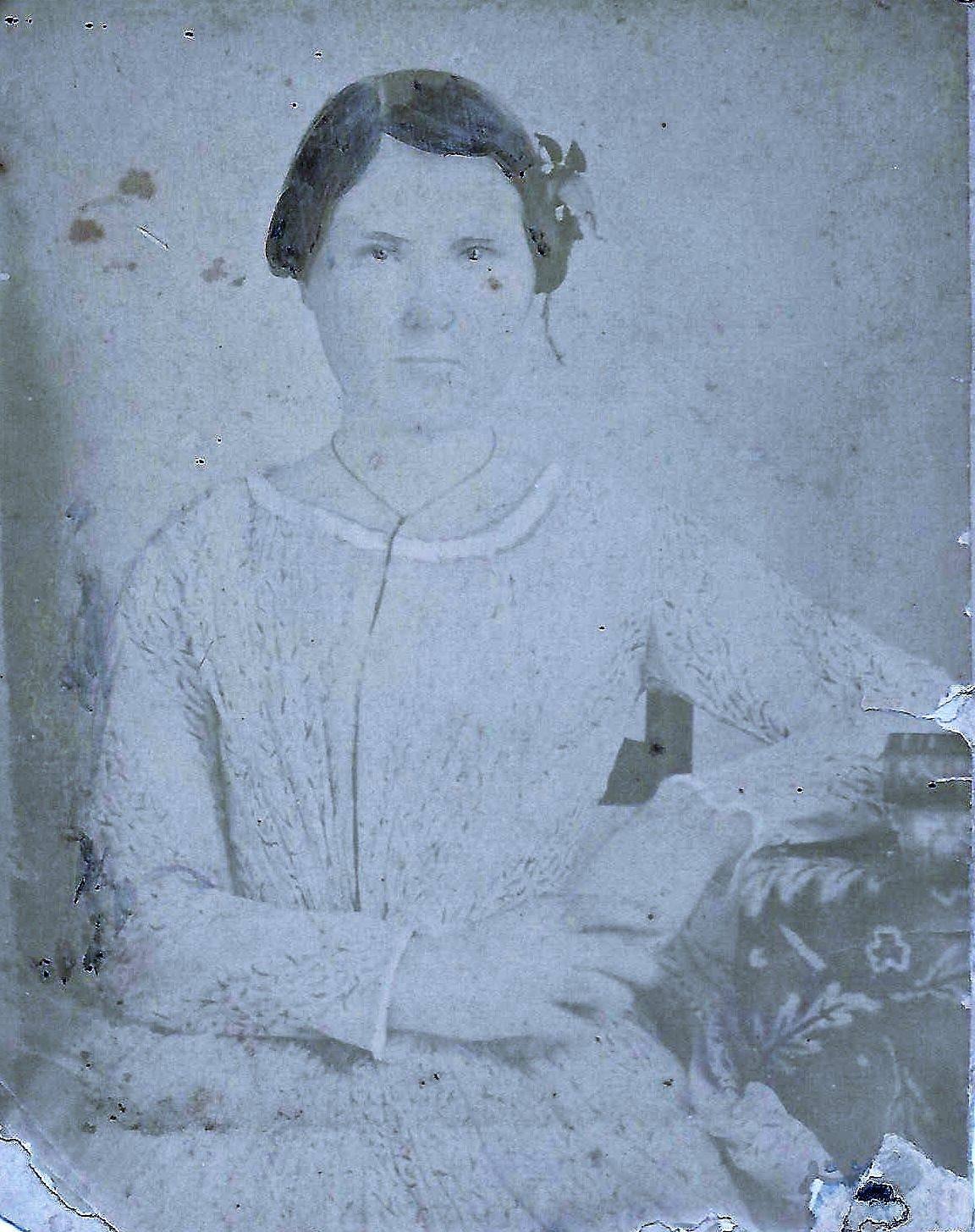
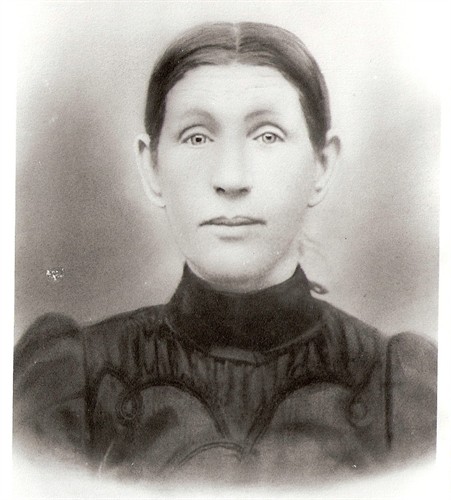
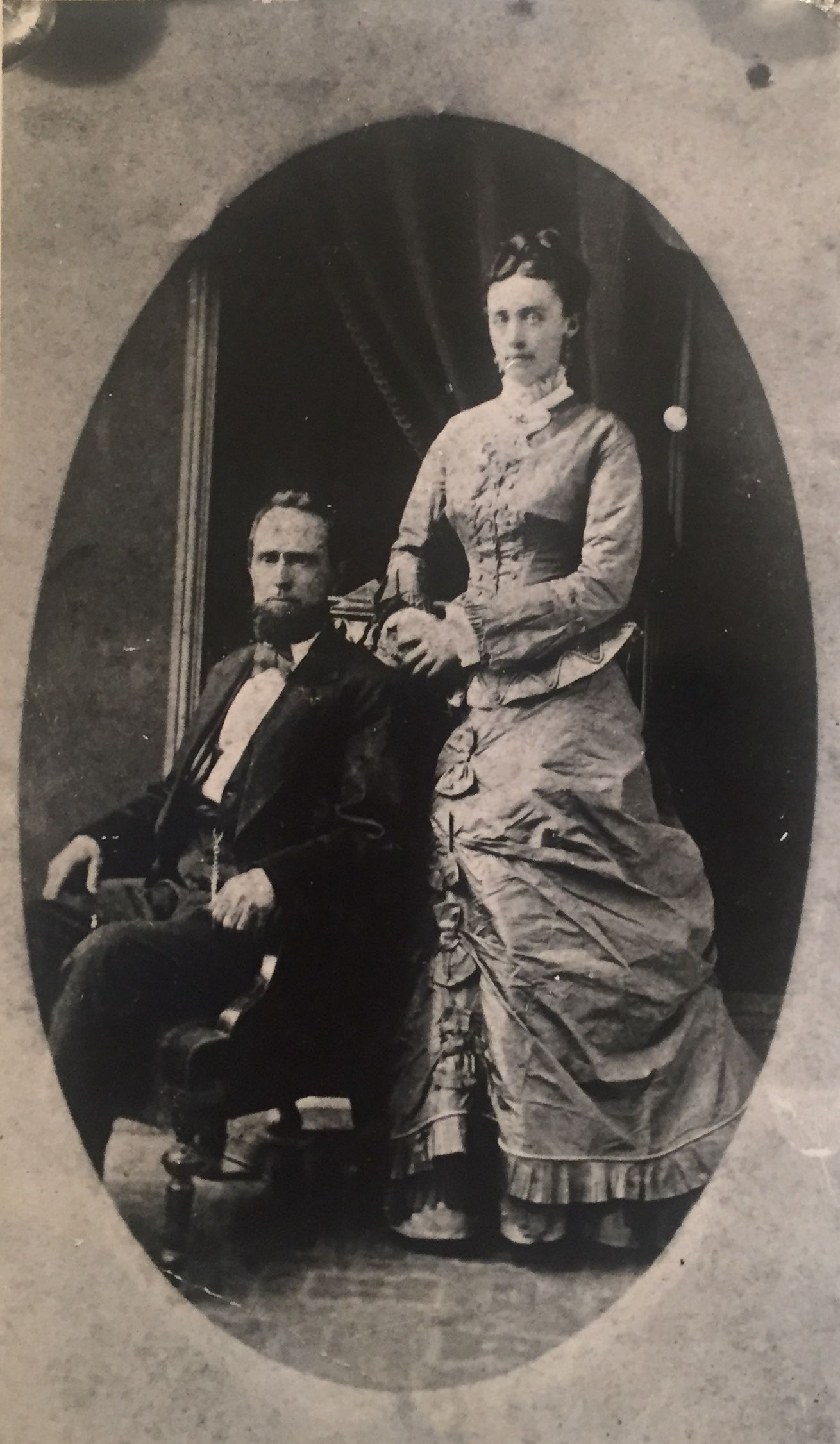
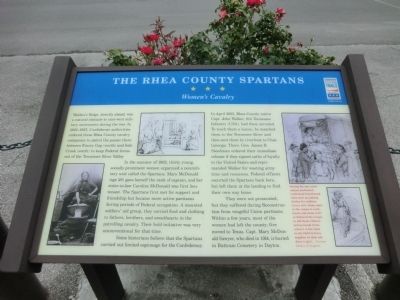
Rhea County Spartans Roster
- Capt Mary E. McDonald
- 1stLt Caroline McDonald
- 2ndLt Rhoda Thomison (top left photo)
- 3rd Lt Rachel Howell
- Sgt Jane Keith (top right photo)
- Flag Bearer Mrs. Charles T. McDonald
- Pvt Jane Paine (top, 2nd from right photo)
- Pvt Mary Paine
- Pvt Ann Paine
- Pvt Mary Keith
- Pvt Mag Keith
- Pvt Sallie Mitchell
- Pvt Sidnah McDonald (bottom left photo)
- Pvt Bonnie McDonald
- Pvt Jane Locke
- Pvt Jennie Hoyal
- Pvt Catharine Hoyal
- Pvt Fannie Allen (top, 2nd from left photo)
- Pvt Martha Early
- Pvt Mary Crawford
- Pvt Mrs. Sallie Whaley Callahan
- Pvt Harriet Foust
 Black Horse Camp #780